
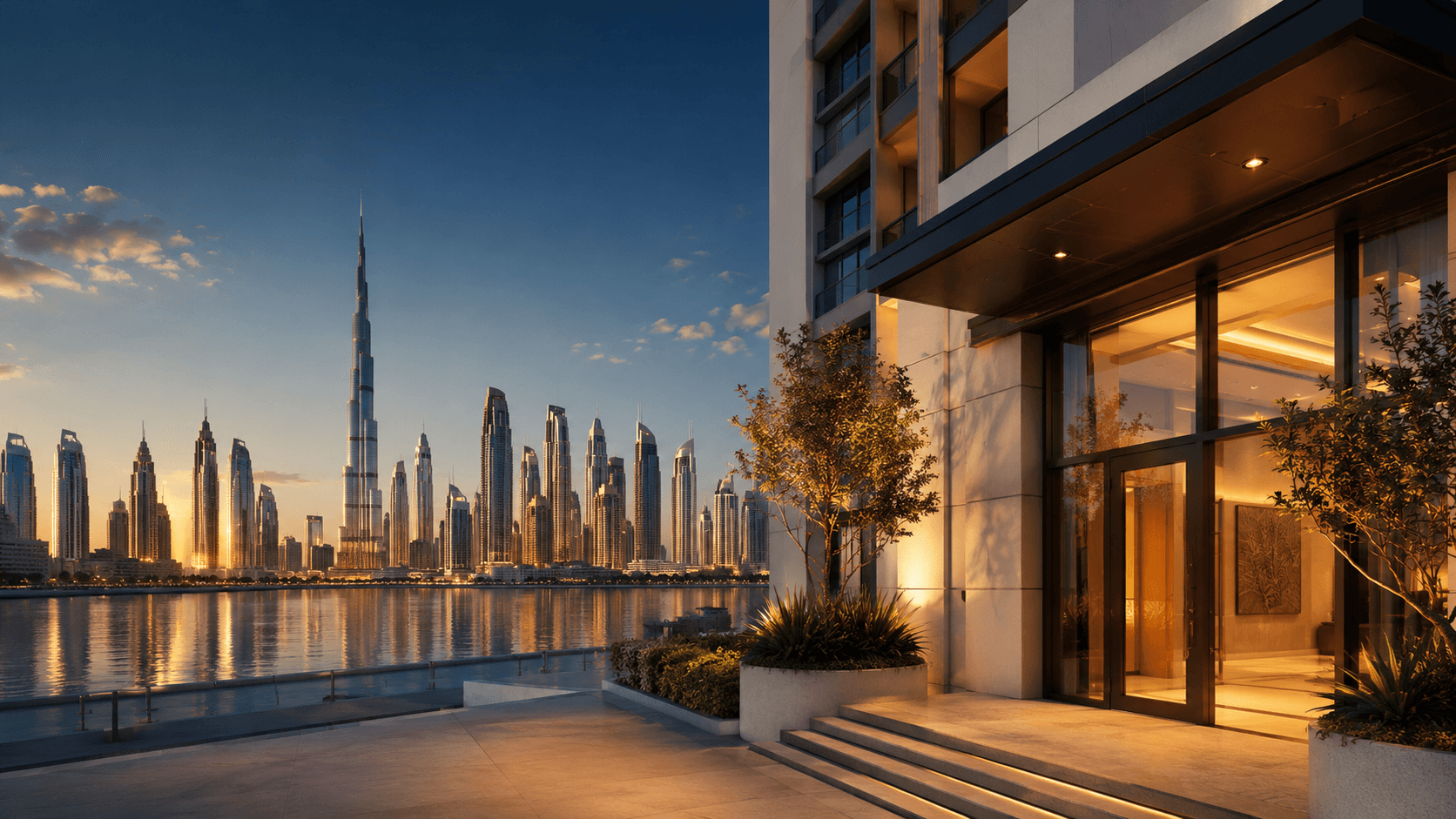
Despite headlines about rising prices, Dubai remains one of the most competitively priced major cities in the world for property ownership. Here's the real affordability picture — and where the value still sits.
When international buyers hear that Dubai property prices have risen 40–60% over the past four years, the instinctive response is: has the window closed? The short answer is no — and the longer answer requires comparing Dubai not to its own past, but to what you actually get elsewhere for the same money.
Dubai vs. The World: Price Per Square Foot
Affordability is not absolute — it is relative. A candid comparison of prime residential price-per-sqft in major cities as of Q1 2026 puts Dubai in a very different context:
| City | Prime Residential (USD/sqft) |
|---|---|
| London (Mayfair/Chelsea) | $2,800 – $4,500 |
| Paris (8th/16th arr.) | $2,200 – $3,800 |
| New York (Manhattan) | $2,000 – $4,000 |
| Singapore (Orchard/Marina) | $2,500 – $4,200 |
| Dubai (Palm/Downtown) | $700 – $1,400 |
| Dubai (emerging areas) | $220 – $480 |
Even at today's elevated prices, Dubai's prime zones are 50–70% cheaper per square foot than comparable addresses in London or Singapore. In emerging communities — where the majority of buyers transact — the gap is even wider.
What AED 1M Actually Buys You
A budget of AED 1 million (approximately USD 272,000) in Dubai can realistically secure:
- A 1-bedroom apartment in Jumeirah Village Circle, Dubai South, or Arjan with strong rental yield (6–8% gross)
- A studio in Business Bay or International City with immediate rental income potential
- Off-plan entry in communities like Damac Hills 2 or Town Square with a 60/40 post-handover payment plan
In London, that same budget buys a parking space in Zone 2. In Dubai, it buys a registered, titled, income-generating asset.
The True Cost of Ownership
Purchase price is only one dimension of affordability. Dubai's total cost of ownership is structurally lower than most comparable markets:
- No annual property tax — zero recurring municipal charge on ownership
- No capital gains tax — 100% of appreciation is yours on exit
- No inheritance tax — assets can be transferred without state deduction
- Low transaction costs — typically 4% DLD fee + agency fees, compared to 10–15% stamp duty in the UK or notary fees across Europe
These structural advantages compound significantly over a 5–10 year hold. An investor comparing a Dubai property to a London buy-to-let is not comparing like-for-like once taxation is factored in.
Where Affordability Has Compressed
It would be dishonest not to acknowledge where the market has tightened. Palm Jumeirah villas, Emirates Hills, and waterfront units in Dubai Creek Harbour have seen genuine price compression — entry points that existed in 2021 are gone. Buyers chasing those same assets today at today's prices carry more risk than buyers who entered early.
The same is true for Business Bay studios that have been repriced by landlords following strong rental demand. The easy arbitrage trades are behind us.
Where Genuine Value Remains
The opportunity in 2026 is not in chasing the already-appreciated segments — it is in identifying the next layer:
Dubai South / Al Maktoum Corridor — the Al Maktoum International Airport expansion is creating a multi-decade infrastructure story. Off-plan entry prices remain below AED 1,200/sqft in many projects. This is the Expo City trade, one cycle later.
Dubailand & Wadi Al Safa — master-planned communities with complete amenities, still priced 30–40% below established zones. End-user demand is rising as families relocate within Dubai.
Ras Al Khor & Dubai Islands — waterfront or near-waterfront access at prices that do not yet reflect the infrastructure investment going in around them.
Affordability for End-Users vs. Investors
These two groups have different affordability frameworks:
End-users — for a family relocating to Dubai, the rent-to-buy calculation has shifted. Average rent for a 2-bedroom apartment in a desirable area is AED 90,000–140,000 per year. With mortgage rates competitive and a 20–25% down payment unlocking ownership, monthly mortgage costs can match or beat rent — while building equity. The affordability case for buying vs. renting in Dubai has rarely been stronger.
Investors — the yield story remains intact. Gross rental yields of 6–8% in mid-market areas compare favourably to net yields of 2–4% in most Western capital cities after tax. With zero capital gains tax, the total return profile is compelling.
The Bottom Line
Dubai is no longer the secret it was in 2020. But "no longer cheap" does not mean "no longer affordable." When measured against comparable quality of life, infrastructure, tax environment, and yield potential, Dubai property in 2026 still represents one of the best value propositions in global real estate.
The buyers who will look back with regret are not the ones who bought in 2026 — they are the ones who waited.
Looking for the right entry point for your budget? Our advisors work across all price segments — from first investment apartments to landmark residences. Get in touch and we'll show you exactly what your budget unlocks today.